
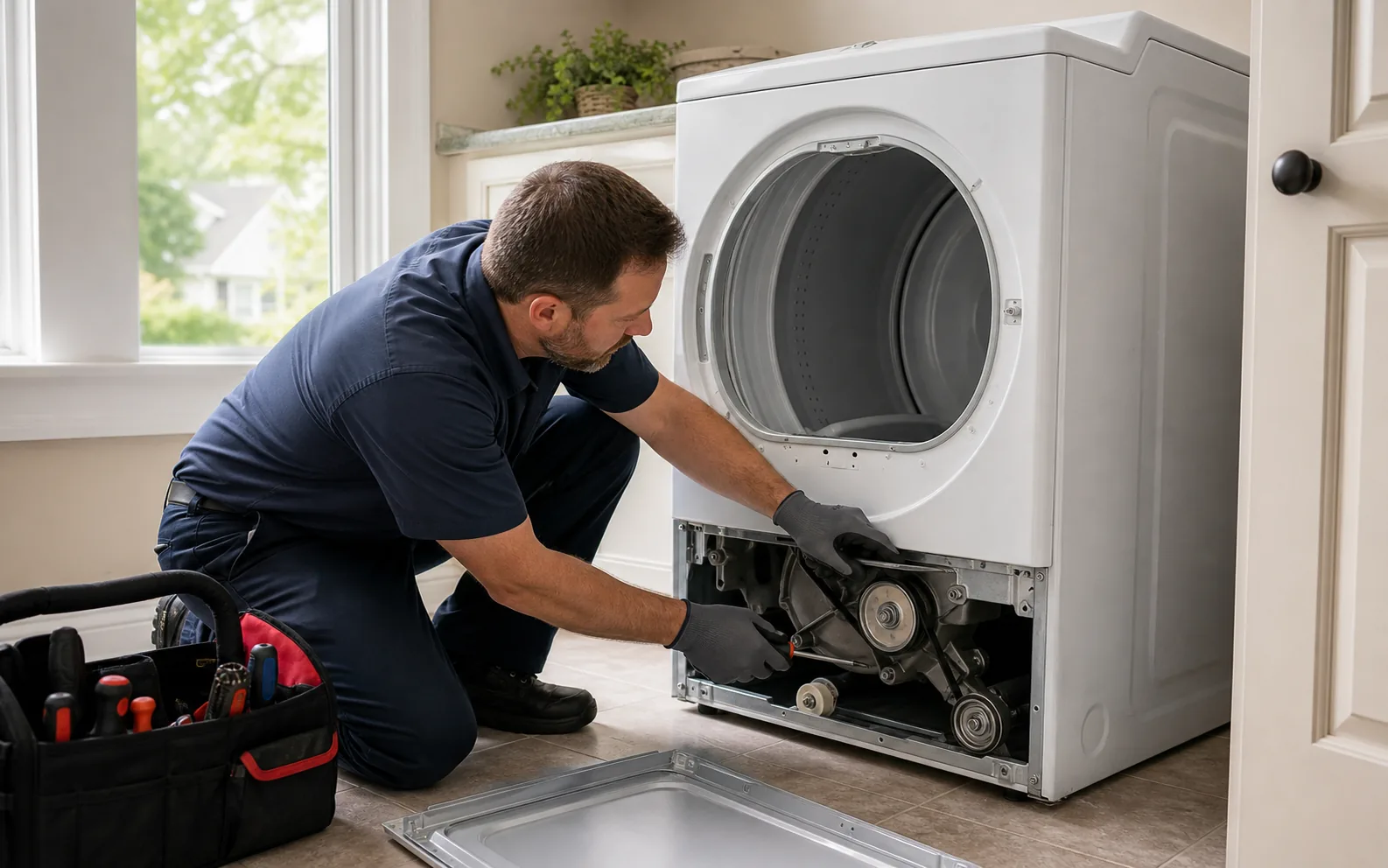
Quick answer
A squeak that follows drum rotation often comes from drum rollers, a rear bearing or front glide. A faster chirp or squeal can involve the idler pulley, belt, or motor. A trapped object can also scrape at the drum edge. Continuing to run a loud dryer can damage the belt, drum, motor, and cabinet.
This guide separates observations a homeowner can make safely from tests that require training, model-specific documentation, and appropriate instruments. A symptom can have several causes, so replacing the first part mentioned online is not a diagnosis.
Most likely causes and what the clues mean
| Possible cause | Typical clues | Responsible next step |
|---|---|---|
| Worn drum rollers or glides | Rhythmic squeak or thump once per rotation | Drum support inspection is required |
| Dry or failing idler pulley | Sharp chirp or squeal that changes with load | Replace worn components with power isolated |
| Rear drum bearing wear | Squeak or grind from the rear center area | Check bearing and mating surfaces |
| Damaged or glazed belt | Squeal, rubber odor, or irregular drum speed | Stop use if slipping or odor is present |
| Motor bearing or trapped object | High-speed squeal or metal scrape | Internal inspection should be completed promptly |
Safe checks to do first
- Empty pockets and inspect the drum perimeter for a visible trapped item.
- Rotate the empty drum by hand only with the dryer unplugged.
- Note whether the sound changes with a small normal load.
- Check for a rubber or burning odor.
- Stop before a quiet squeak becomes grinding or drum drag.
Write down the model number, exact error code, when the symptom begins, and whether it happens every cycle. Photos of the installation and visible leak or frost pattern can also help a technician plan the visit. Do not remove panels unless the manufacturer identifies the step as owner maintenance for that exact model.
When to stop using the appliance
Stop troubleshooting and arrange qualified service when:
- the drum is hard to turn or drops out of alignment
- the sound becomes grinding, metal-on-metal, or accompanies odor
- the belt slips or the drum stops turning
What affects the repair decision
A repair estimate depends on the confirmed failed component, access time, model and serial number, parts availability, installation condition, and whether a secondary failure caused the visible symptom. The appliance age matters, but it should be considered together with overall condition, previous repairs, energy use, warranty coverage, and the cost of a comparable replacement.
For a useful appointment, ask for the diagnostic finding in plain language, the parts and labor included, warranty terms, and any condition that could change the estimate. Avoid an exact price based only on a symptom: two appliances with the same symptom can require very different repairs.
Repair or replace?
Repair is usually easier to justify when the fault is isolated, the cabinet and major systems are in good condition, parts are available, and the repair has a clear warranty. Replacement may deserve consideration when there are multiple major failures, extensive corrosion or water damage, unavailable parts, a serious installation problem, or repeated high-cost repairs. A diagnosis should come before that decision.
Frequently asked questions
Can I spray lubricant into the dryer?
No. Spray can contaminate clothing, attract lint, reach hot parts, and fail to reach sealed bearings correctly.
Will the squeak go away by itself?
It may change as parts warm, but wear generally progresses and can create more expensive damage.
Why is it louder with heavy loads?
Extra drum load increases force on rollers, glides, bearings, the belt, and idler, making marginal parts noisier.
Related local help
- Dryer Repair service
- Bucks and Montgomery County service areas
- Appliance brands we service
- Service and booking FAQ
Sources and review basis
- U.S. CPSC dryer fire safety
- Owner and service information for the exact appliance model should be checked before disassembly, reset, or part selection.
Technical statements were checked against owner-safety principles, model-specific manufacturer guidance where linked, and the diagnostic scope described in our editorial policy. Links were reviewed on August 3, 2026.
Last technical review: . If you spot an error, use our contact page and include the article URL.